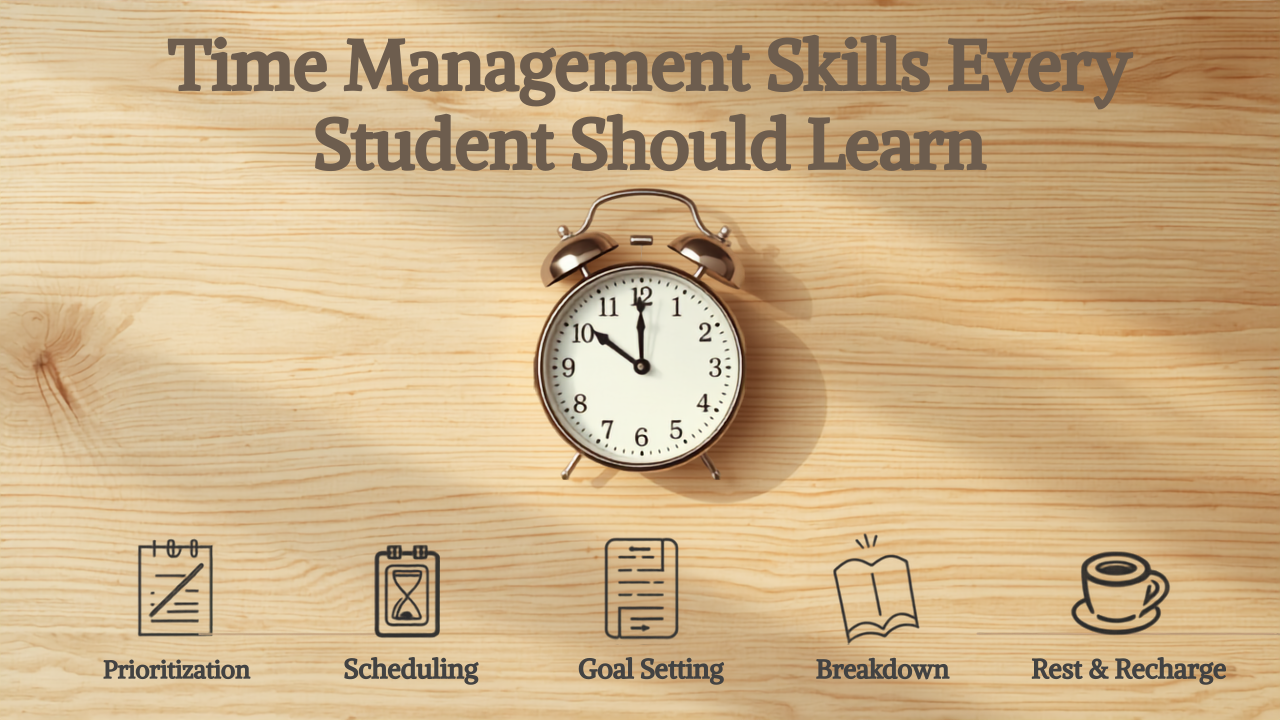
Every student has the same 24 hours in a day, yet some consistently finish assignments on time, perform well in exams, and still find time for hobbies and relaxation. The difference often lies in effective time management rather than intelligence or talent.
Time management is not about filling every minute with work. Instead, it is about using available time wisely to accomplish important goals while maintaining a healthy balance between academics, personal life, and well-being. Developing these skills early helps students build discipline, confidence, and independence that continue to benefit them throughout higher education and future careers.
Whether you are in high school, college, or preparing for competitive examinations, learning how to organize your time can significantly improve your academic experience.
Why Time Management Matters for Students
Students today face more responsibilities than ever before. Besides attending classes, they often participate in extracurricular activities, complete projects, prepare for examinations, and manage personal commitments. Without proper planning, these responsibilities can quickly become overwhelming.
Effective time management offers several benefits, including:
- Better academic performance
- Reduced stress and anxiety
- Improved concentration
- Greater productivity
- More free time for hobbies and family
- Better work-life balance
- Increased confidence and self-discipline
Research has consistently shown that students with strong planning and organizational habits are more likely to complete assignments on time and perform better academically than those who rely on last-minute studying.
Understanding the Difference Between Being Busy and Being Productive
Many students mistake being busy for being productive. Spending six hours at a study table does not necessarily mean effective learning has taken place.
For example, a student may spend hours switching between textbooks, social media, and messaging apps without making meaningful progress. Another student may study with complete focus for just two hours and accomplish far more.
Productivity means completing important tasks efficiently rather than simply spending more time studying.
Essential Time Management Skills Every Student Should Learn
Set Clear Academic Goals
Successful students begin with clear objectives. Instead of saying, “I want better grades,” define specific goals such as:
- Complete mathematics homework before dinner.
- Finish reading one chapter every evening.
- Improve science test scores by ten percent.
- Revise previous lessons every weekend.
Specific goals provide direction and make progress easier to measure.
Prioritize Tasks Effectively
Not every task deserves equal attention. Learning to distinguish between urgent and important activities helps students focus on what truly matters.
For instance:
- Preparing for tomorrow’s exam is both urgent and important.
- Organizing study notes is important but may not require immediate attention.
- Watching another episode of a television series is neither urgent nor essential during examination week.
Prioritizing important academic work prevents unnecessary stress later.
Create a Realistic Study Schedule
A study timetable helps students stay organized without feeling overwhelmed.
Rather than planning unrealistic eight-hour study sessions, divide study time into manageable blocks with short breaks.
An example daily routine could include:
- Morning revision before classes
- Homework after returning home
- Evening review of difficult topics
- Night preparation for the following day
Consistency matters more than studying for long hours occasionally.
Break Large Tasks into Smaller Steps
Large assignments often appear intimidating. Dividing them into smaller tasks makes them easier to complete.
For example, instead of writing an entire research paper in one day:
- Choose the topic.
- Conduct research.
- Create an outline.
- Write the introduction.
- Complete each section.
- Edit and proofread.
Small achievements build momentum and reduce procrastination.
Learn to Avoid Procrastination
Procrastination is one of the biggest obstacles to academic success.
Students often delay work because they fear failure, feel overwhelmed, or become distracted.
One simple solution is the “five-minute rule.” Commit to studying for just five minutes. Once started, continuing becomes much easier because the hardest part is often beginning.
Removing distractions like unnecessary phone notifications also improves concentration.
Use a Planner or Digital Calendar
Keeping track of deadlines reduces forgotten assignments and last-minute panic.
Students can use:
- Physical planners
- Wall calendars
- Mobile calendar applications
- Study management apps
Recording assignment deadlines, exam dates, and project milestones creates a clear picture of upcoming responsibilities.
Develop Self-Discipline
Time management depends largely on self-discipline.
Students who consistently follow their schedules build habits that eventually require less effort.
Simple routines such as studying at the same time each day gradually become automatic.
Discipline is developed through repeated practice rather than motivation alone.
Learn to Say No When Necessary
Many students overcommit themselves by accepting every invitation or extracurricular activity.
Although social activities are valuable, constantly saying yes can interfere with academic priorities.
Learning to politely decline unnecessary commitments protects valuable study time.
Practical Time Management Techniques That Work
The Pomodoro Technique
One popular study method involves:
- Study for 25 minutes.
- Take a five-minute break.
- Repeat four cycles.
- Enjoy a longer break afterward.
This technique helps maintain concentration while preventing mental fatigue.
Time Blocking
Time blocking assigns specific hours to different activities.
For example:
- 7:00–8:00 AM: Review notes
- 4:00–5:30 PM: Homework
- 6:00–7:00 PM: Exercise
- 8:00–9:00 PM: Revision
Following dedicated time blocks reduces decision fatigue.
The Two-Minute Rule
If a task takes less than two minutes, complete it immediately.
Examples include:
- Filing class notes
- Replying to an instructor’s email
- Organizing study materials
Completing small tasks quickly prevents unnecessary accumulation.
Common Time Wasters Students Should Avoid
Even the best study plan becomes ineffective if students frequently waste time.
Some common distractions include:
Excessive Social Media Use
Social media platforms are designed to capture attention.
Checking notifications every few minutes interrupts focus and increases study time unnecessarily.
Scheduling designated social media breaks helps maintain productivity.
Multitasking
Many students believe they can study while watching videos or chatting with friends.
Research suggests that multitasking reduces concentration and learning efficiency.
Focusing on one task at a time produces better academic outcomes.
Lack of Sleep
Late-night studying may appear productive, but sleep plays a vital role in memory and learning.
Students who consistently get sufficient rest often perform better than those who sacrifice sleep for extra study hours.
Poor Organization
Searching for missing notebooks, scattered notes, or misplaced assignments wastes valuable study time.
Keeping study materials organized saves time every day.
Real-Life Example of Effective Time Management
Imagine two university students preparing for final examinations.
Student A postpones studying until the last week. They stay awake late each night, feel stressed, and struggle to remember important concepts during exams.
Student B creates a revision plan one month earlier. They review one subject daily, complete practice questions every weekend, and maintain regular sleep.
Although both students spend similar total hours preparing, Student B experiences less stress and often performs better because consistent preparation improves understanding and retention.
This example demonstrates that effective planning frequently matters more than studying longer.
How Time Management Reduces Academic Stress
Many students associate academic life with constant pressure. However, poor planning often creates unnecessary stress.
When assignments accumulate, deadlines overlap, and revision begins too late, anxiety naturally increases.
Good time management allows students to:
- Complete work gradually
- Feel prepared for examinations
- Maintain confidence
- Reduce last-minute panic
- Enjoy healthier routines
A balanced schedule supports both academic achievement and mental well-being.
Building Long-Term Habits for Success
Time management is not a temporary strategy used only during examination periods.
Students who consistently practice these habits develop valuable life skills that remain useful throughout adulthood.
These habits include:
Planning Ahead
Review upcoming deadlines every week instead of reacting at the last moment.
Reflecting on Progress
At the end of each week, evaluate what worked well and what could improve.
Staying Flexible
Unexpected events happen. Adjust schedules when necessary rather than abandoning them completely.
Celebrating Small Wins
Completing assignments, finishing revision sessions, or maintaining a study routine deserves recognition.
Acknowledging progress increases motivation and reinforces positive habits.
Frequently Asked Questions About Time Management Skills
What is the most important time management skill for students?
Prioritizing tasks is often considered the most valuable skill because it helps students focus on important academic responsibilities before less essential activities.
How many hours should students study each day?
The ideal study duration varies depending on educational level, workload, and learning style. Consistent, focused study sessions are generally more effective than long periods of distracted studying.
How can students stop procrastinating?
Breaking large tasks into smaller steps, removing distractions, setting realistic goals, and starting with short study sessions can make it easier to overcome procrastination.
Can time management improve academic performance?
Yes. Effective time management allows students to prepare consistently, meet deadlines, reduce stress, and spend more time understanding concepts instead of rushing through them.
Learning effective time management skills is one of the greatest investments students can make in their education and personal growth. Rather than relying on last-minute efforts, successful students develop routines that help them plan ahead, prioritize important tasks, and use their time intentionally. These habits not only improve academic performance but also reduce stress, strengthen self-confidence, and encourage a healthier balance between study and personal life. By practicing these skills consistently, students create a strong foundation for lifelong learning, future careers, and continued personal success, proving that smart planning is often the key to achieving meaningful goals.
