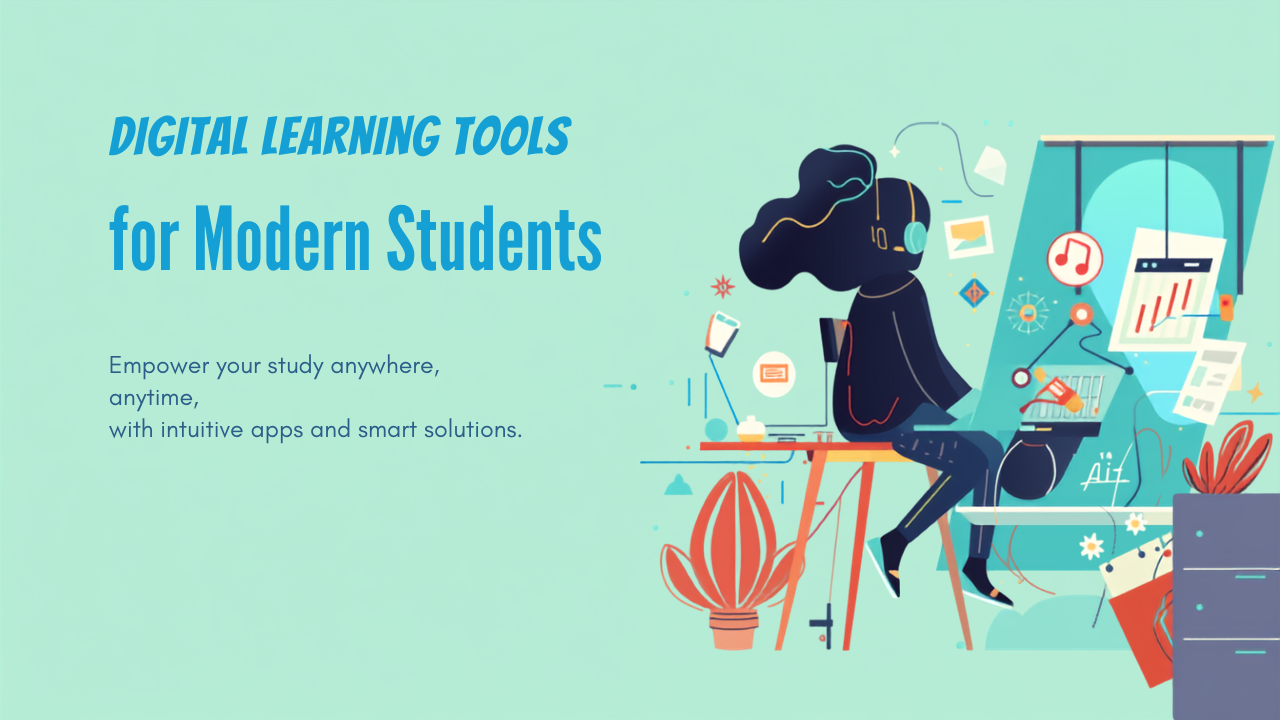
Education has evolved significantly over the past decade. Traditional classrooms are now supported by digital platforms, interactive applications, cloud-based collaboration tools, and artificial intelligence. Students are no longer limited to printed textbooks or classroom lectures. Instead, they have access to an extensive range of digital resources that make learning more engaging, flexible, and personalized.
Digital learning tools help students organize assignments, collaborate with classmates, improve productivity, conduct research, and understand complex topics more effectively. These technologies support various learning styles by combining text, audio, video, animations, quizzes, and interactive simulations.
A student preparing for final examinations, for example, may use a note-taking application to organize study materials, watch recorded lectures on an online learning platform, collaborate with classmates through shared documents, and practice concepts using interactive quizzes. Together, these tools create a comprehensive learning experience that extends beyond the classroom.
Understanding how digital learning tools work allows students to make informed choices that enhance both academic performance and lifelong learning skills.
What Are Digital Learning Tools?
Digital learning tools are software applications, online platforms, and technology-based resources designed to support education and skill development. They help students access learning materials, communicate with instructors, complete assignments, practice concepts, and monitor academic progress.
Unlike traditional learning resources, digital tools often provide interactive experiences that encourage active participation. Features such as instant feedback, multimedia content, collaborative editing, personalized recommendations, and progress tracking make learning more engaging.
Educational institutions increasingly integrate these technologies into classrooms because they improve accessibility and allow learning to continue beyond physical campus environments.
Students can use digital learning tools for various purposes, including:
- Taking organized notes
- Managing assignments
- Watching educational videos
- Participating in virtual classes
- Creating presentations
- Collaborating on projects
- Practicing quizzes
- Conducting research
- Learning new languages
- Developing technical skills
As technology continues to advance, these tools become even more sophisticated, offering adaptive learning experiences tailored to individual needs.
Why Digital Learning Tools Matter
Modern education requires more than memorizing information. Students must develop critical thinking, communication, collaboration, creativity, and digital literacy.
Digital learning tools support these essential skills in several ways.
Improved Accessibility
Learning materials are available anytime and from virtually anywhere with internet access. Students who cannot attend physical classes can continue learning through recorded lectures and online resources.
This flexibility supports different schedules, learning speeds, and educational needs.
Better Organization
Managing multiple subjects, deadlines, assignments, and examinations can become overwhelming.
Digital calendars, planners, reminder applications, and task management platforms help students organize responsibilities efficiently, reducing missed deadlines and unnecessary stress.
Interactive Learning
Research consistently shows that active learning improves understanding and long-term memory compared to passive reading alone.
Interactive quizzes, virtual laboratories, simulations, educational games, and multimedia lessons encourage students to apply concepts rather than simply memorize facts.
Personalized Learning
Every student learns differently.
Some understand concepts through videos, while others prefer reading, diagrams, or hands-on activities. Digital learning platforms often recommend personalized lessons based on previous performance, helping students focus on areas requiring additional practice.
Collaboration Opportunities
Group projects have become easier through cloud-based collaboration tools.
Students can edit documents simultaneously, exchange ideas, share presentations, and communicate regardless of geographical location.
These experiences also prepare learners for modern workplaces where remote collaboration is increasingly common.
Types of Digital Learning Tools
Understanding different categories helps students select resources that best fit their educational goals.
Learning Management Systems
Learning Management Systems serve as central platforms where students access course materials, submit assignments, receive grades, participate in discussions, and communicate with instructors.
These systems simplify course organization while giving educators a structured environment for delivering content.
Students benefit by having all academic resources stored in one location.
Note-Taking Applications
Digital note-taking tools allow students to organize lecture notes, create searchable notebooks, add images, record audio, and synchronize content across multiple devices.
Unlike traditional notebooks, digital notes can be edited, categorized, and backed up automatically.
A biology student, for instance, can combine typed notes with diagrams, laboratory photos, and voice recordings from lectures in a single notebook.
Cloud Storage Solutions
Cloud storage enables students to safely store assignments, presentations, research papers, and study materials online.
Files remain accessible from laptops, tablets, or smartphones while reducing the risk of losing important academic work due to device failure.
Automatic synchronization also ensures students always access the latest version of their documents.
Video Learning Platforms
Educational video platforms provide visual explanations that simplify difficult concepts.
Complex mathematical formulas, scientific experiments, programming lessons, and historical events become easier to understand through animations and demonstrations.
Students often combine textbook learning with educational videos to reinforce understanding.
Online Research Databases
Reliable research is essential for academic writing.
Digital libraries, academic journals, government publications, and scholarly databases provide trustworthy information supported by evidence.
Learning how to evaluate credible sources also strengthens research skills and critical thinking.
Collaboration Platforms
Modern group assignments require efficient teamwork.
Collaboration tools support shared editing, project discussions, file sharing, scheduling meetings, and task allocation.
Students gain valuable communication and teamwork experience while completing academic projects more effectively.
AI-Powered Learning Assistants
Artificial intelligence has become an increasingly valuable educational resource.
AI tools can explain difficult topics, summarize lengthy documents, generate practice questions, suggest study plans, and provide personalized learning recommendations.
However, students should use AI responsibly by verifying information and developing their own understanding rather than relying solely on automated responses.
Benefits of Digital Learning Tools for Students
The advantages extend far beyond convenience.
Students who effectively integrate digital learning technologies often develop stronger academic habits and greater confidence.
Enhanced Time Management
Digital calendars, reminders, and scheduling tools help students balance coursework, extracurricular activities, internships, and personal responsibilities.
Breaking large assignments into manageable tasks improves productivity and reduces procrastination.
Increased Student Engagement
Interactive content captures attention more effectively than static learning materials.
Gamified quizzes, simulations, animations, and multimedia presentations encourage active participation, making lessons more memorable.
Continuous Learning
Learning no longer stops after classroom hours.
Students can review lectures, practice exercises, revisit notes, and explore additional educational resources whenever they choose.
This flexibility supports consistent knowledge retention.
Immediate Feedback
Many digital learning platforms provide instant quiz results and explanations.
Immediate feedback helps students identify mistakes early, allowing them to strengthen weak areas before examinations.
Skill Development Beyond Academics
Using digital tools also develops transferable skills valued by employers, including:
- Digital literacy
- Communication
- Collaboration
- Information management
- Critical thinking
- Problem-solving
- Adaptability
- Independent learning
These competencies remain valuable throughout higher education and professional careers.
Choosing the Right Digital Learning Tools
Not every educational application suits every student.
Selecting appropriate tools depends on several important factors.
Academic Needs
Different subjects require different resources.
Engineering students may benefit from simulation software, while language learners may prioritize vocabulary applications and pronunciation tools.
Understanding individual learning objectives helps narrow suitable options.
Ease of Use
A complicated interface can reduce productivity.
Students should select tools with intuitive navigation, clear organization, and minimal learning curves.
Simple platforms often encourage consistent long-term use.
Device Compatibility
Learning tools should work across laptops, tablets, and smartphones whenever possible.
Cross-platform compatibility allows students to continue studying regardless of the device they are using.
Security and Privacy
Educational platforms often store personal information and academic records.
Choosing applications with strong privacy policies, secure authentication, and encrypted data protection helps safeguard sensitive information.
Cost Considerations
Many excellent educational tools provide free versions suitable for most students.
Before purchasing premium subscriptions, students should evaluate whether additional features genuinely improve their learning experience.
Best Practices for Using Digital Learning Tools
Technology improves learning only when used effectively.
Developing healthy digital habits ensures these tools remain educational rather than distracting.
Set clear study goals before beginning each session.
Organize digital files using consistent folder structures and meaningful file names.
Back up important assignments regularly to cloud storage.
Limit unnecessary notifications during study periods to maintain concentration.
Use AI tools as learning assistants instead of shortcuts for completing assignments.
Verify information obtained from online sources using reputable educational references.
Balance screen time with handwritten practice, reading printed materials, and regular breaks to reduce digital fatigue.
Review notes consistently rather than relying on last-minute revision before examinations.
These habits help students maximize learning outcomes while maintaining productivity.
Common Challenges Students May Face
Despite numerous advantages, digital learning also presents challenges.
Information overload can make it difficult to identify high-quality educational resources.
Distractions from social media, entertainment platforms, and constant notifications may interrupt concentration.
Technical issues such as poor internet connectivity or outdated devices can affect access to online learning.
Some students may also experience digital fatigue after spending extended periods in front of screens.
Developing structured study routines, minimizing distractions, taking regular breaks, and maintaining balanced learning habits can help address these challenges effectively.
The Future of Digital Learning
Educational technology continues evolving rapidly.
Artificial intelligence, virtual reality, augmented reality, adaptive learning systems, and immersive simulations are transforming educational experiences worldwide.
Future classrooms will likely combine traditional teaching methods with intelligent digital platforms capable of personalizing lessons according to each student’s strengths, weaknesses, and learning pace.
Wearable technologies, real-time language translation, virtual laboratories, and advanced analytics may further improve accessibility and engagement across various educational settings.
As technology advances, digital literacy will become an increasingly important life skill, enabling students to adapt successfully to changing academic and professional environments.
Frequently Asked Questions
What are digital learning tools?
Digital learning tools are software applications, online platforms, and educational technologies that help students study, organize coursework, collaborate, conduct research, and improve learning outcomes.
How do digital learning tools improve education?
They provide interactive learning experiences, personalized recommendations, flexible access to educational materials, instant feedback, and improved collaboration among students and educators.
Are digital learning tools suitable for all students?
Most students can benefit from digital learning tools, although individual preferences, learning styles, internet availability, and accessibility needs should be considered when selecting appropriate resources.
Can AI replace traditional studying?
No. AI can support learning by explaining concepts, generating practice questions, and organizing information, but students still need critical thinking, independent practice, and active engagement to build lasting knowledge.
