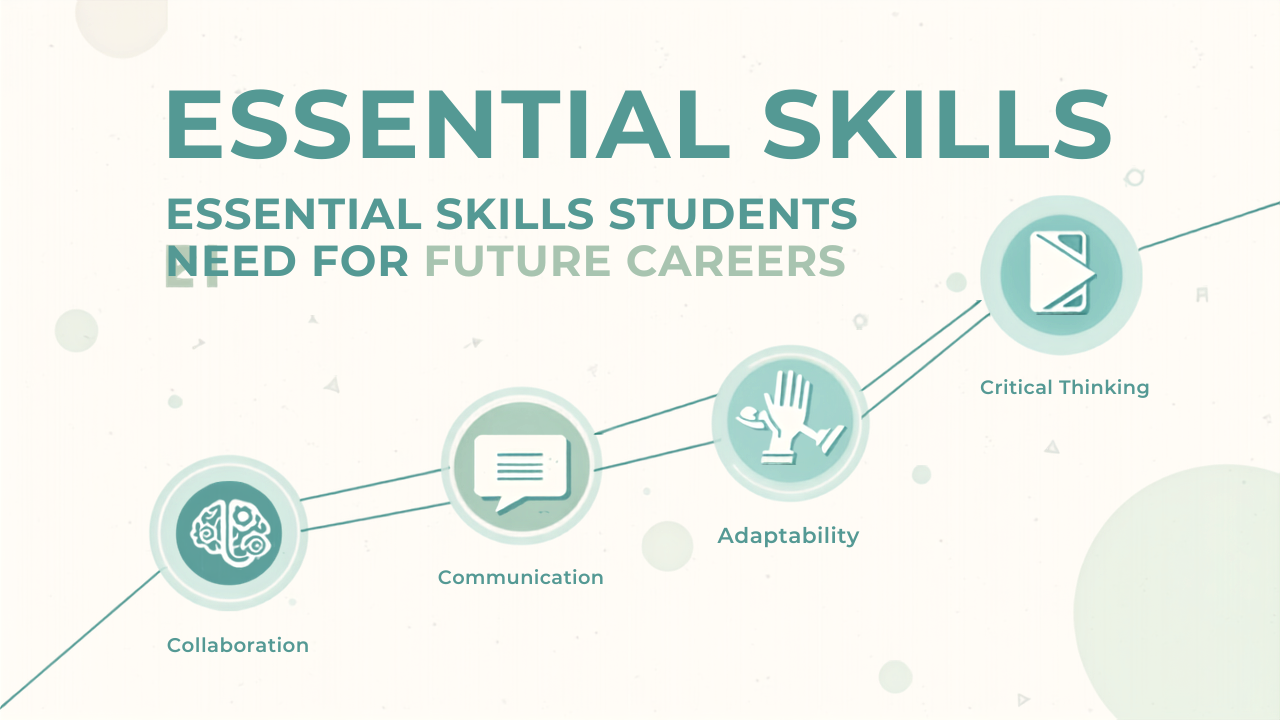
Future careers are evolving faster than ever before. Advances in technology, changing workplace expectations, and the rise of automation are transforming the skills employers value most. While academic knowledge remains important, students who combine technical expertise with strong interpersonal abilities are more likely to succeed in a competitive job market. Preparing for future careers is no longer about choosing a single profession and following a fixed path. Instead, it involves building adaptable skills that remain valuable across industries and throughout a lifetime.
Whether students dream of becoming engineers, healthcare professionals, entrepreneurs, educators, designers, or business leaders, the right combination of skills can help them stay relevant as industries continue to evolve. Understanding these essential abilities early allows students to make informed educational choices and develop confidence for future opportunities.
Why Future Career Skills Matter More Than Ever
The workplace has undergone significant changes over the past decade. Digital transformation, remote collaboration, artificial intelligence, and global connectivity have reshaped how organizations operate. As a result, employers increasingly look beyond grades and qualifications to evaluate a candidate’s ability to solve problems, communicate effectively, and adapt to change.
Research from global workforce studies consistently highlights that many employers prioritize transferable skills alongside technical expertise. These transferable skills can be applied across different roles and industries, making them valuable regardless of career path.
For example, imagine two graduates applying for the same marketing role. Both have similar academic qualifications, but one has experience leading student projects, presenting ideas confidently, and analyzing digital campaign data. The second graduate focused only on coursework. The first candidate often stands out because employers recognize the practical application of both technical and soft skills.
Developing future-ready skills also prepares students for careers that may not even exist today. Many emerging industries are creating entirely new job roles, making continuous learning an essential part of professional success.
Communication Skills Build Strong Professional Relationships
Clear communication remains one of the most valuable workplace skills. Students who learn to express ideas confidently, listen actively, and adapt their communication style can work effectively with colleagues, clients, and leaders.
Communication includes much more than speaking. It involves writing professional emails, preparing reports, delivering presentations, participating in meetings, and collaborating with diverse teams.
For instance, a software developer may possess excellent coding skills but still need to explain technical concepts to non-technical clients. Similarly, healthcare professionals rely on compassionate communication to build trust with patients and families.
Students can strengthen communication skills by participating in debates, classroom presentations, group discussions, volunteer programs, and student organizations. Regular reading and writing also improve vocabulary, clarity, and confidence.
Critical Thinking Helps Solve Complex Problems
Employers value individuals who can evaluate information objectively rather than simply memorizing facts. Critical thinking involves analyzing situations, identifying patterns, questioning assumptions, and making informed decisions.
A business analyst, for example, might examine declining sales and identify underlying customer behavior instead of making quick assumptions. Engineers troubleshoot system failures by carefully evaluating multiple possible causes before implementing solutions.
Students develop critical thinking by solving case studies, participating in research projects, analyzing current events, and asking thoughtful questions during learning.
Adaptability Supports Long-Term Career Growth
Technology evolves rapidly, requiring professionals to continuously update their knowledge. Adaptability means staying open to change, learning new tools, and adjusting to different work environments.
Consider how remote work became common across many industries. Employees who quickly learned digital collaboration platforms adapted more successfully than those resistant to change.
Students can improve adaptability by exploring different subjects, learning new software, taking online courses, and embracing unfamiliar challenges without fear of making mistakes.
Digital Literacy Is Becoming a Core Skill
Digital literacy extends far beyond basic computer knowledge. Modern workplaces expect employees to use cloud platforms, collaboration software, spreadsheets, presentation tools, data visualization software, cybersecurity practices, and digital communication platforms.
Even careers traditionally considered non-technical increasingly require digital competence. Teachers use virtual classrooms, healthcare professionals manage electronic medical records, and finance specialists rely on analytical software.
Students should become comfortable with productivity software, online collaboration platforms, basic data analysis, internet research techniques, and responsible digital citizenship.
Understanding cybersecurity fundamentals, such as creating strong passwords and recognizing phishing attempts, also contributes to digital confidence.
Technical Skills Complement Academic Learning
Every profession has specialized technical knowledge. Students should identify technical skills relevant to their intended careers while maintaining a willingness to learn new technologies as industries evolve.
Examples include:
- Programming languages for software development
- Graphic design tools for creative careers
- Financial analysis software for accounting and finance
- Laboratory techniques for scientific research
- Data analytics for business intelligence
- Digital marketing platforms for marketing professionals
- Project management software for organizational roles
Technical expertise provides practical competence, while soft skills determine how effectively that knowledge is applied in real workplace situations.
Emotional Intelligence Enhances Teamwork
Emotional intelligence refers to recognizing, understanding, and managing emotions while building positive relationships with others.
Employees with strong emotional intelligence handle workplace conflicts professionally, support team collaboration, and communicate respectfully under pressure.
Imagine a project team facing a tight deadline. A technically skilled employee may contribute valuable expertise, but a teammate with emotional intelligence helps reduce stress, encourages collaboration, and maintains productive communication.
Students can strengthen emotional intelligence by practicing empathy, listening carefully, managing stress, reflecting on feedback, and respecting diverse perspectives.
Leadership Begins Before Employment
Leadership is not limited to management positions. Students demonstrate leadership by taking initiative, organizing activities, motivating classmates, and contributing to group success.
Leading a college project, coordinating a volunteer event, or mentoring junior students all help develop leadership experience.
Strong leaders accept responsibility, make informed decisions, encourage teamwork, and remain accountable for outcomes.
Leadership experience also builds confidence during interviews because students can discuss practical examples of problem-solving and teamwork.
Time Management Improves Productivity
Balancing classes, assignments, extracurricular activities, internships, and personal responsibilities requires effective time management.
Successful students learn to prioritize tasks based on importance and deadlines rather than reacting to immediate pressures.
Useful time management strategies include:
- Creating weekly study schedules
- Breaking large assignments into smaller tasks
- Setting realistic daily goals
- Reducing unnecessary distractions
- Reviewing progress regularly
Good time management reduces stress while improving both academic and professional performance.
Creativity Encourages Innovation
Creativity is valuable in nearly every profession. It involves generating fresh ideas, improving existing processes, and finding unique solutions to challenges.
Marketing professionals design engaging campaigns. Engineers develop efficient systems. Teachers create interactive learning experiences. Healthcare providers improve patient care through innovative approaches.
Students can develop creativity through brainstorming sessions, creative writing, design projects, problem-solving exercises, and exploring different perspectives.
Collaboration Creates Better Results
Modern workplaces emphasize teamwork across departments, cultures, and even countries. Employees often collaborate virtually with colleagues located around the world.
Students who work effectively in teams understand how to share responsibilities, resolve disagreements respectfully, and appreciate different viewpoints.
Group assignments, sports teams, community service, and student clubs all provide valuable opportunities to practice collaboration.
Learning how to both lead and support others prepares students for professional environments where teamwork drives organizational success.
Lifelong Learning Keeps Careers Future Ready
Graduating from school or university no longer marks the end of education. Continuous learning has become essential as industries evolve rapidly.
Professionals regularly update their knowledge through certifications, online courses, workshops, conferences, books, and practical experience.
For example, a digital marketer who learned social media advertising five years ago must continually adapt to new algorithms, platforms, and consumer behavior. Similarly, cybersecurity professionals constantly update their knowledge to address emerging threats.
Students who develop curiosity and a growth mindset become lifelong learners capable of adapting to changing career demands.
Financial Literacy Supports Career Success
Financial literacy helps students make informed decisions throughout their careers. Understanding budgeting, saving, investing, taxation, credit management, and retirement planning contributes to long-term financial stability.
Young professionals who begin managing finances early often feel more confident making career decisions, negotiating salaries, and planning future goals.
Schools increasingly recognize financial literacy as an important life skill alongside academic education.
Networking Opens New Opportunities
Professional relationships often create valuable career opportunities. Networking allows students to learn from experienced professionals, discover internships, and gain industry insights.
Networking does not simply involve collecting contacts. It focuses on building genuine relationships through meaningful conversations and shared interests.
Students can expand their networks by attending seminars, joining professional organizations, participating in internships, engaging in alumni events, and maintaining professional online profiles.
Even simple conversations with guest speakers or professors may lead to future career guidance.
Problem Solving Builds Employer Confidence
Every workplace encounters challenges. Employers appreciate individuals who remain calm under pressure and approach problems logically.
Effective problem solving includes:
- Identifying the root cause
- Gathering relevant information
- Evaluating possible solutions
- Implementing the best option
- Reviewing outcomes for improvement
Students strengthen problem-solving abilities through practical projects, competitions, internships, and real-world case studies.
Employers often ask interview questions designed to assess problem-solving skills because these abilities directly influence workplace performance.
Cultural Awareness Supports Global Careers
Organizations increasingly operate across international markets. Employees regularly interact with colleagues and customers from different cultural backgrounds.
Cultural awareness encourages respectful communication, inclusive teamwork, and stronger business relationships.
Students gain cultural understanding by learning new languages, participating in exchange programs, collaborating with diverse classmates, and exploring global perspectives through reading and travel.
This skill becomes especially valuable in multinational companies and remote work environments.
Resilience Helps Overcome Challenges
Career journeys rarely follow perfect paths. Students may experience academic setbacks, unsuccessful interviews, or changing career interests.
Resilience enables individuals to recover from disappointments, learn from mistakes, and continue working toward long-term goals.
For example, many successful entrepreneurs experienced multiple business failures before achieving lasting success. Rather than giving up, they used setbacks as learning opportunities.
Students can build resilience by embracing constructive feedback, maintaining realistic expectations, celebrating progress, and viewing challenges as opportunities for growth.
Practical Ways Students Can Build Future Career Skills
Developing career skills does not require waiting until graduation. Students can begin strengthening these abilities during school or college through everyday experiences.
Joining student organizations develops teamwork and leadership. Volunteering improves communication and empathy. Internships provide practical workplace exposure. Online learning platforms help students explore emerging technologies and industry trends.
Creating personal projects also demonstrates initiative. A computer science student might develop an app, while a business student could analyze local market trends. Creative portfolios, blogs, research papers, and freelance work all showcase practical abilities beyond classroom learning.
Seeking mentorship from teachers, industry professionals, or alumni offers valuable guidance about career expectations and professional development.
Regular self-reflection also helps students identify strengths and areas for improvement. Setting achievable learning goals encourages steady progress over time.
The Future Belongs to Adaptable Learners
Future careers will continue evolving alongside technological innovation, economic changes, and global collaboration. While specific job roles may change, foundational skills such as communication, adaptability, critical thinking, digital literacy, emotional intelligence, creativity, and lifelong learning will remain valuable across industries.
Students who invest in these essential skills today prepare themselves not only for their first job but also for long-term professional growth. Academic knowledge provides a strong foundation, but combining it with practical workplace skills creates well-rounded professionals capable of thriving in changing environments.
Success in tomorrow’s workforce will depend less on memorizing information and more on the ability to learn continuously, solve meaningful problems, collaborate effectively, and adapt confidently to new opportunities. By developing these future-ready skills early, students position themselves for rewarding careers in an increasingly dynamic and interconnected world.
